

The star has handed over the entirety of his £25k Mercury Prize cash to the trust for venues, which works to save the Britain's small concert spaces.
Fender was given the award on mid-October as his latest record People Watching was chosen as the best record of the last 12 months.
He has chosen to donate the funds to the Music Venues Trust, in acknowledgment of the crucial part local spots played in his beginning days.
"As an artist would not have achieved what I am doing today if it weren't for all the gigs I played around the region, and beyond, when I was beginning," said Sam Fender. "These locations are iconic, but they are struggling."
From early 2023 onward, more than 150 of these spaces have ceased operations – roughly 16% of the total UK scene.
Recently, major artists like Pulp, Coldplay, Katy Perry and Ed Sheeran have all aided the MVT in its attempts to keep the scene afloat, by adding a minor surcharge to their ticket costs, which supports local stages.
He also joined in, collecting over £100k on his 2024 arena tour to help numerous local spots across Britain.
The donation assisted venues that were dealing with imminent closure due to challenges stemming from floods, fire incidents and personal losses, as well as permit problems, legal disputes and sound issues.
Other venues obtained monetary aid in improving facilities and technical equipment that positively impacted performers and concertgoers.
"The notion that money from performances in big venues helps the smaller venues, where it kicks off for musicians like me, is just logical," the star has stated.
Fender is far from the only musician to contribute his Mercury Prize prize money to worthy causes.
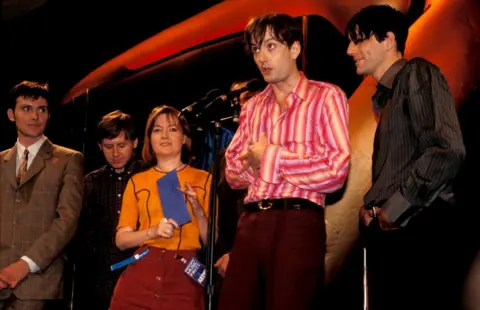
Back when Pulp earned the prize in the mid-90s for their album Different Class, frontman the singer declared that the act would donate their cash to the charity the charity.
During 2002, musician Ms Dynamite divided her award between several organizations, such as the NSPCC and a charity for Sickle Cell.
"And I gave a £1,000 to my local community centre, to their classes, because I did gymnastics when I was younger and they lacked better apparatus," the artist explained to a publication.
Previously, they contributed their winnings to the local youth club that developed their act, in addition to other grassroots music organisations.
And the 1994 recipients the group contributed their prize to a MS organization after a friend was identified with the condition.
"Winning was sufficient," said vocalist the singer. "The prize was the extra but we didn't need the extra, because we had the main prize. So our success affected somebody else's life."
Last week, the Music Venues Trust shared it had rescued two grassroots venues in that region, by placing them under community ownership.
The first in Southampton and the second in Bristol were bought under the public acquisition initiative, which is supported by the arts council and supporters who purchase "shares" in the properties.


